
Uncategorized
What 1000mg & 2000mg Mean on a THC Vape (UK)
What Does 1000mg / 2000mg Mean on a THC Vape? UK Strength Guide
If you’ve shopped for a vape and seen “1000mg” or “2000mg” splashed across the box, you’ve probably assumed bigger number = stronger hit. It’s the most common misunderstanding in the whole category and brands lean on it deliberately. The truth is more useful once you understand it: that number rarely tells you how potent a vape is. It tells you how much there is.
This guide decodes what those milligram figures actually mean, why a “2000mg” pen can be weaker than a “1000mg” one, and because this matters in the UK which high-strength options are actually legal to buy in 2026.
What the “mg” number actually measures
The milligram figure on a vape almost always refers to total cannabinoid content across the whole device or bottle not the strength of each puff, and not the percentage concentration. Think of it like alcohol: a 2-litre bottle of beer and a small glass of whisky might contain a similar amount of pure alcohol, but nobody calls the beer “stronger. ” Volume and potency are different axes. A “2000mg” vape simply contains 2,000mg of cannabinoid spread across however much liquid is in the device. Two things drive that number: how much liquid is in the device (a 2ml pen vs 1ml) and the concentration of cannabinoid in that liquid (50% vs 90%).
[link to: Strength guide]
Why “2000mg” can be weaker than “1000mg” Potency per puff depends on concentration, not total content.
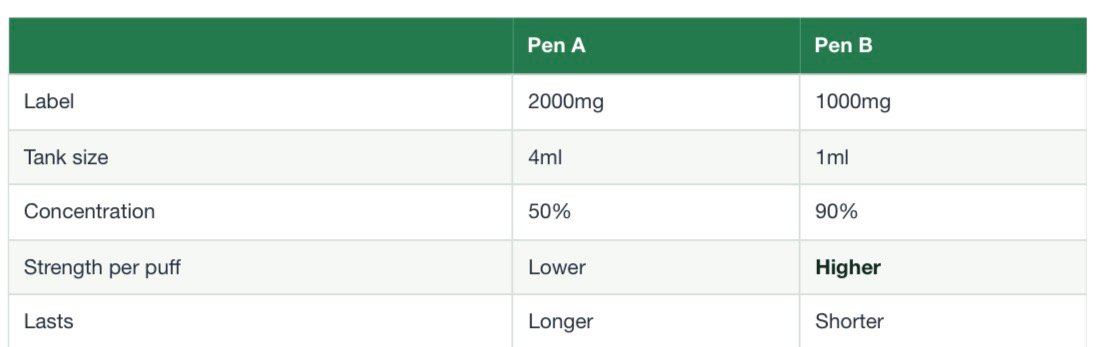
Pen A wins on the box. Pen B wins on the actual hit. If you chase only the headline number, you can end up with a diluted, weaker-feeling product that simply lasts longer. The number that predicts strength is concentration (%), plus which cannabinoid is inside.
The cannabinoid matters more than the milligrams Cannabinoids differ enormously in binding strength: CBD is non-intoxicating (2000mg of CBD = calm, not high); THCP is exceptionally potent (research suggests it binds CB1 receptors far more strongly than delta-9 THC); THCA converts on heating. So “2000mg” tells you nothing about felt strength until you know which cannabinoid those milligrams are.
[link to: THCP category]
How to read a UK vape label properly
Ignore the giant front-of-box number first and look for: (1) which cannabinoid (and is it legal?), (2) concentration (%), (3) tank/bottle volume (ml), (4) a lab report (COA). If a product shouts “2000mg” but won’t show concentration or a lab report, treat the number as marketing.
[link to: Lab reports]
The UK legality catch
There’s a reason UK shoppers fixate on milligrams: they want something strong that’s also legal. In 2026: delta-9 THC is a Class B controlled drug (illegal); HHC is banned; disposable vapes are banned (since 1 June 2025); THCP and THCA are currently legal. So the honest high-strength route isn’t a “2000mg delta-9 pen” (can’t be sold compliantly) it’s a properly concentrated, lab-tested THCP product in a refillable format.
[link to: Legal hub]
Choosing strength sensibly
High concentration + a potent cannabinoid means less is more. Whatever the mg total, start with one small puff and wait. For longevity, a higher total mg (bigger tank) genuinely means the device lasts longer that’s the one thing the number reliably tells you. Just don’t confuse “lasts longer” with “hits harder.”
The bottom line “1000mg” and “2000mg” describe how much, not how strong. Real strength comes from concentration and the cannabinoid and in the UK the strongest legal route is a well-concentrated, lab-tested, refillable THCP device.
[link to: THCP category]
FAQ
– Does a higher mg number mean a stronger THC vape?
No mg usually means total cannabinoid content (volume), not potency. Strength per puff comes from concentration (%) and the cannabinoid.
– Is a 2000mg THC vape pen legal in the UK?
A genuine high-delta-9 pen isn’t legal. High-strength legal options use THCP or THCA in a refillable format.
– Why does my 2000mg vape feel weaker than a 1000mg one?
Bigger tank, lower concentration. Concentration drives felt strength; total mg drives how long it lasts.
– What should I look at instead of the mg number?
Cannabinoid type, concentration %, tank volume, and a lab report (COA).
